
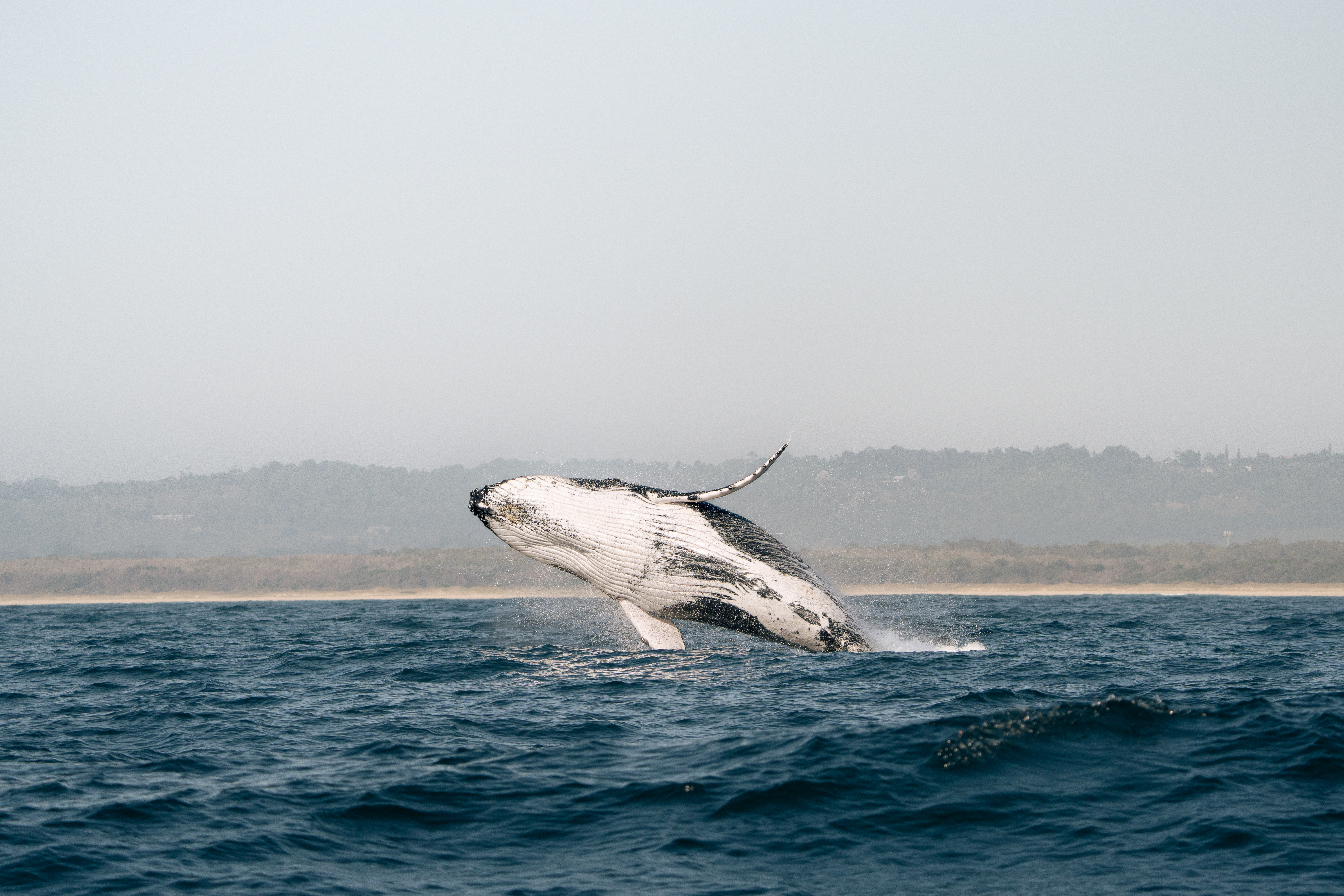
Less than a century ago, Australia’s humpback whales were on the brink of disappearing. Now, they’re thriving—and the Sunshine Coast has become one of the best places to witness their extraordinary return. In this blog, we explore the dark history of whaling in Australia, the courageous turning point that changed everything, and how we’re now swimming alongside these majestic creatures during the Australian whale migration as part of a growing movement to protect and connect with our oceans.
Whaling in Australia: A Brief History
From the late 18th century, commercial whaling was a booming industry in Australia. Whales were hunted for their oil, meat, and baleen, which were used in everything from lighting lamps to making corsets. Humpback whales were especially targeted for their large size and oil-rich bodies.
Whaling operations expanded quickly through the 1800s, with both British colonists and local whaling companies establishing shore-based and open-sea stations. Aboriginal and Torres Strait Islander peoples had long had relationships with whales, often featuring them in stories, ceremonies, and hunting practices. However, the scale and purpose of commercial whaling were entirely different, driven by economic gain rather than sustenance or tradition.

The Turning Point: From Whaling to Watching During the Whale Migration
By the mid-20th century, whale populations had plummeted. In the 1950s and 60s alone, tens of thousands of humpbacks were killed along Australia’s east coast. By 1962, their numbers were so depleted that the east coast whaling industry collapsed. In 1978, Australia officially ended all commercial whaling and declared itself a whale sanctuary.
This was a powerful shift in public values. Instead of seeing whales as a resource, Australians began to see them as a wonder. The government banned whaling, supported conservation efforts, and backed global whale protection agreements like the International Whaling Commission’s moratorium on commercial whaling.
The Sunshine Coast: A Humpback Highway
Today, an estimated 40,000 humpback whales migrate along Australia’s east coast each year between June and October — from Antarctica to the warm northern waters in Queensland to breed and give birth. This “humpback highway” of the Australian whale migration passes right by the Sunshine Coast, making it one of the best places in the world to encounter these gentle giants.
It’s an incredible comeback story: from near-extinction to thriving populations in just a few decades.
Our Why: Connection Inspired Protection
At The Pressure Project, we run small-group whale swims during the Australian whale migration on the Sunshine Coast not just to offer unforgettable experiences—but to help create deeper connections between humans and the ocean. We believe that when people witness the grace and power of a whale up close, something shifts. We fall in love with what we experience—and what we love, we protect.
As a business that relies on the ocean for our freediving, snorkelling and marine adventures, we feel a responsibility to be part of the solution. It’s our obligation to look after marine life and the health of the ocean so that future generations can experience the same wonder we do today. We operate with care, in small groups, always guided by respect for the animals and their natural behaviour. Crowds stress whales out—so we avoid them. Every swim is about the whales, not us.
Whether it’s through a respectful encounter with a curious humpback or learning how these animals have survived against all odds, our goal is simple: to foster love, awe, and long-term protection for our oceans.
Want to be part of it? Join us for a whale swim or our new Whale Week retreat this season and witness the story for yourself.
Frequently Asked Questions
When is the best time to see humpback whales on the Sunshine Coast in Queensland, Australia?
The whale migration season on the Sunshine Coast runs from late June to early October. Peak times are July through September, when both northbound and southbound whales pass through the area.
Can anyone swim with whales?
Yes — if you’re comfortable in the ocean and can swim confidently. Our tours are guided by experienced freedivers who provide support and guidance for all skill levels. For swimming with whales you must be 10+ years old, ad must be accompanied with an adult (guardian) if under 18.
Why do you keep the tours small?
We believe in personal, low-impact encounters. Smaller groups means less disturbance for the whales and a more intimate, respectful experience for our guests when swimming with whales.
Are whale swims safe for the animals?
We follow strict environmental guidelines and the Australian National Guidelines for Whale and Dolphin Watching (2017) to ensure minimal disturbance. Our approach is passive — we never chase or approach the whales directly.
Leave a Reply